

The Science Behind 9kt, 14kt, 18kt & 22kt Gold Jewelry
A Complete Manufacturing Guide by DVNJEWELRY (Est. 1944)
Gold jewelry is not merely an ornament. It is metallurgy, chemistry, craftsmanship, cultural heritage, and financial value combined into one timeless material.
At DVNJEWELRY, established in 1944, we have been manufacturing solid gold jewelry across multiple karat purities including 9kt, 10kt, 12kt, 14kt, 18kt, 21kt, and 22kt. With over 80 years of legacy and a solar-powered, women-empowered production facility, we understand gold not only as a luxury product — but as a scientific composition.
This guide explains the real difference between 9kt, 14kt, 18kt and 22kt gold jewelry — from alloy science to durability, shade retention, hypoallergenic performance, and long-term value.
Understanding Gold Purity: What Does “Karat” Really Mean?
Pure gold is 24 karat (24kt), meaning it is 99.9% gold. However, pure gold is extremely soft and not suitable for everyday jewelry.
To increase strength and durability, gold is mixed with controlled proportions of other metals such as copper and silver. This process is called alloying.
Each karat level represents the percentage of pure gold in the final composition.
9kt Gold – Engineered Strength & Expanding Global Demand
9kt gold contains 37.5% pure gold and 62.5% alloy metals.
It is one of the most durable forms of solid gold jewelry and is widely preferred in markets like the UK and Australia. Due to its strength, it is ideal for everyday wear pieces such as rings, bracelets, and children’s jewelry.
At DVNJEWELRY, our 9kt alloy engineering focuses on:
- Long-term color stability
- Controlled copper-to-silver ratio
- Anti-oxidation resistance
- Hypoallergenic safety compliance
- Kid-safe composition
9kt gold is also positioned close to the premium gold-filled segment in the global market, making it a powerful bridge between affordability and authenticity.
For brands targeting volume with long-term durability, 9kt gold offers significant strategic advantages.
14kt Gold – The Global Bestseller for Daily Luxury
14kt gold contains 58.5% pure gold and 41.5% alloy metals.
It is the most commercially successful karat category worldwide, especially in the United States and Europe. It offers the perfect balance between durability and richness of color.
Why is 14kt gold so popular?
- Strong enough for daily wear
- Richer yellow tone than 9kt
- Lower scratch risk compared to 18kt
- Excellent for engagement rings and fine jewelry
At DVNJEWELRY, our 14kt gold manufacturing process includes:
- Precision alloy measurement
- Controlled melting temperature
- CNC precision finishing
- Multi-stage polishing
- Shade retention testing
This ensures the final product maintains its brilliance and color consistency for years.
18kt Gold – Luxury, Shine & Premium Positioning
18kt gold contains 75% pure gold and 25% alloy metals.
This higher gold content produces a deeper yellow tone and a softer finish compared to 14kt. It is widely used in luxury designer collections and high-end markets.
Advantages of 18kt gold:
- Rich premium color
- Higher intrinsic gold value
- Luxury positioning in retail
- Ideal for statement jewelry
At DVNJEWELRY, 18kt gold production involves:
- Advanced alloy control
- Heat precision bonding
- Micro-polish finishing
- Surface refinement under magnification
Our technical approach ensures that even higher purity gold maintains structural integrity while preserving brilliance.
22kt Gold – Traditional Purity & Cultural Significance
22kt gold contains 91.6% pure gold and is deeply rooted in cultural and traditional jewelry markets, particularly in India and the Middle East.
Due to its higher gold content, 22kt gold is softer and typically used in:
- Bridal jewelry
- Investment pieces
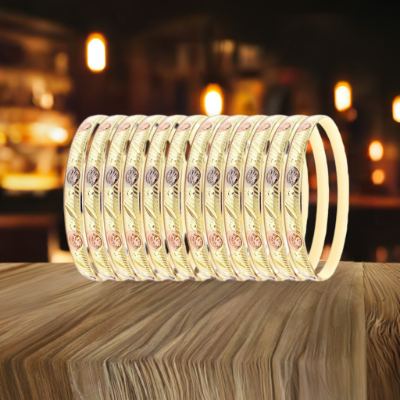
- Bangles and traditional ornaments
- Cultural ceremonial jewelry
At DVNJEWELRY, we enhance 22kt strength through:
- Carefully balanced alloy infusion
- Artisan hand-finishing
- Structural reinforcement techniques
- Traditional craftsmanship integration
This allows us to deliver purity without compromising wearable durability.
The Science of Gold Alloying – Why It Determines Finish & Longevity
Gold alloying is not random mixing. It is controlled metallurgy.
The final shade, hardness, polish retention, and allergy safety depend on:
- Copper percentage
- Silver balance
- Melting temperature
- Cooling rate
- Surface finishing method
At DVNJEWELRY, we do not rely on superficial electroplating methods. Our gold-filled jewelry uses a heat bonding process rather than electroplating, ensuring long-term durability and resistance to peeling.
For solid gold jewelry, we conduct:
- Oxidation resistance testing
- Structural strength analysis
- Long-term shade retention monitoring
- Hypoallergenic compliance testing
This scientific process is what separates standard manufacturing from legacy manufacturing.
Sustainability & Ethical Manufacturing – The Modern Standard
Search engines and global consumers now prioritize responsible brands.
DVNJEWELRY operates with:
- Solar-powered production units
- 100% child-labor-free policies
- 60%+ women workforce
- Support for aged artisans
- Ethical sourcing protocols
Sustainability is not a marketing statement. It is integrated into our operational structure.
As a women-empowered manufacturing organization, we believe fine jewelry should represent both beauty and responsibility.
Choosing the Right Gold Karat for Your Brand or Collection
The correct karat selection depends on:
- Target market geography
- Customer spending capacity
- Product type (rings, bangles, chains)
- Wear frequency
- Design complexity
- Brand positioning
For example:
- 9kt → Strength-focused, high-volume markets
- 14kt → Daily luxury and engagement jewelry
- 18kt → Premium collections and designer lines
- 22kt → Traditional and cultural segments
Understanding this strategic positioning helps brands build long-term product stability.
Frequently Asked Questions
- Which gold karat is best for daily wear?
Ans: 14kt gold offers the best balance between durability and color richness for everyday jewelry.
- Is 9kt gold real gold?
Ans: Yes. 9kt gold contains 37.5% pure gold and is legally recognized as solid gold.
- Does 18kt gold change color over time?
Ans: Properly alloyed 18kt gold maintains its shade for decades. Oxidation resistance depends on alloy balance and finishing.
- Is DVNJEWELRY gold hypoallergenic?
Ans: Yes. Our alloy engineering prioritizes skin safety and anti-allergic compliance.
Leave your comment